 Eesti
Eesti English
 Русский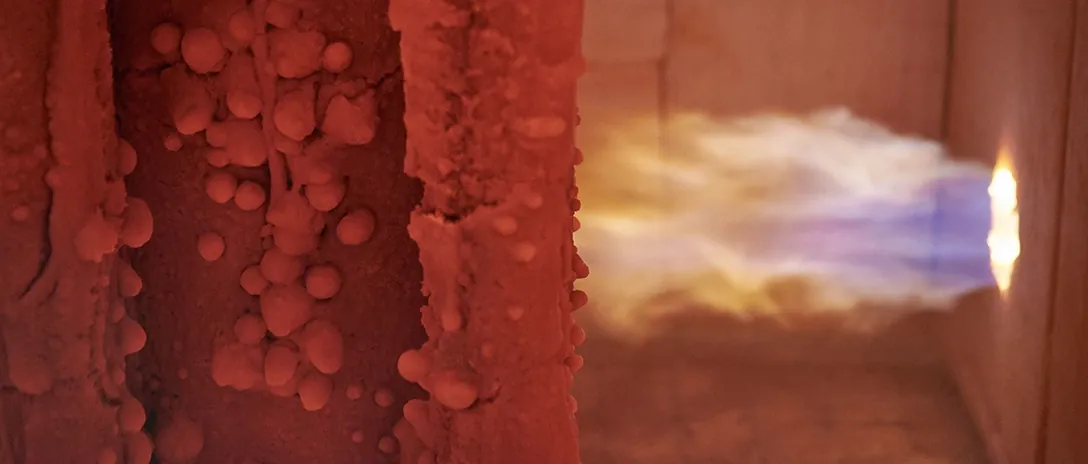
Passive fire protection: how intumescent coatings work
Steel is strong, but it is not fireproof. As temperature climbs in a building fire, structural steel softens and loses load-bearing capacity long before it melts. By the time the metal reaches roughly 550 °C, a typical section has shed around half of its strength — enough for a loaded beam or column to buckle and fail. The purpose of passive fire protection is simple but vital: to slow that heating down and buy the time people need to escape and firefighters need to respond.
What passive fire protection is
Passive fire protection is protection that is built into the structure and works the moment a fire starts, with nothing to switch on. Unlike a sprinkler system, which is an active measure that has to detect a fire and then activate, passive protection is always in place and always ready. Its job is not to put the fire out but to protect the things that must not fail — above all the load-bearing steel frame that holds the building up.
It does this by insulating the steel so that it stays below its critical temperature — the point at which it can no longer safely carry its load — for a defined period of time. That period is what gives occupants a route out and gives the emergency services a window to act before the structure is compromised.
How intumescent coatings work
Intumescent coatings are the most widely used form of passive protection for exposed steelwork, and they are quietly clever. Applied, they look like an ordinary paint film — thin, smooth and often decorative, so the steel can stay visible in the finished building. In normal conditions they simply sit there like any other coating.
Under the heat of a fire, everything changes. At a trigger temperature the coating reacts and intumesces — it swells and expands into a thick, foamed carbon layer called a char, many times thicker than the original film. That char is full of trapped gas and acts as a highly effective insulator. It dramatically slows the rate at which heat passes through to the steel underneath, holding the metal below its critical temperature while the char does its work.
In effect, a coating measured in fractions of a millimetre transforms itself into a thick protective blanket exactly when it is needed, then sacrifices itself to shield the structure.
Specifying to a fire rating
Fire protection is not a single product you simply apply; it is engineered to a required performance. The key measure is the fire-resistance period — typically 30, 60, 90 or 120 minutes — set by building regulations according to the use, height and occupancy of the structure.
How much coating a given steel member needs to reach that rating depends on the member itself, described by its section factor (sometimes written Hp/A). This compares the surface area exposed to the fire against the mass of steel available to absorb heat:
- Chunky, heavy sections have a low section factor. They heat up slowly and need a thinner coating for a given rating.
- Slender, lightweight sections have a high section factor. They heat up quickly and need a thicker coating to reach the same rating.
That is why fire protection is specified beam by beam and column by column, matching the coating thickness to each section and to the required period — not applied as a single blanket figure across the job.
Where it is used
Intumescent systems protect structural steel almost anywhere it is used and needs to be seen or kept slim: the frames of commercial and public buildings, multi-storey car parks, retail and leisure developments, warehouses and distribution centres, and processing and industrial plants. Wherever a steel frame carries load and the design calls for a specified fire rating, an intumescent coating is usually the practical way to achieve it.
- Unprotected structural steel loses much of its strength in a fire and can fail well before it melts.
- Passive fire protection is always active — no trigger or activation needed — and keeps steel below its critical temperature for a set period.
- Intumescent coatings look like thin paint but swell into a thick insulating char under heat.
- Protection is engineered to a fire rating (30/60/90/120 minutes) and to each member's section factor.
Where Marisell fits
As a main Hempel dealer we supply Nullifire intumescent systems for structural steel and help you specify them correctly — matching coating thickness to the required fire rating and to the section factor of each member, backed by the right primers and topcoats for the environment. Read more on our passive fire protection page, see the full range of protective & industrial coatings we supply, or contact us with your steel schedule and target rating.
Specified well and applied correctly, intumescent protection is invisible in everyday use and decisive in the one moment that matters — buying the time that keeps people safe and the structure standing.
Need to protect structural steel?
Send us your steel schedule and required fire rating — we'll help specify the right Nullifire intumescent system.